


• Successful leaders use Virtual Executive Assistant Services to reclaim time and focus on high-value work.
• Top executives master four core levers when delegating workload: trust, structure, delegation, and partnership.
• A great assistant doesn’t just offer support, but can also become your internal consultant. When leaders empower their assistants to track and identify inefficiencies, the entire business becomes sharper.
• The strongest partnerships are stable and full-time.
The ultimate sign of success isn’t how many hours you work; it’s the quality of the time you reclaim. That’s where leverage comes in, not doing more, but getting more done through the right support.
Business leaders are managing endless meetings, constant communication, and strategic decisions that demand focus and time. You know you need help, but the thought of delegating complex, high-stakes work feels like yet another project to manage.
A business coach in Madrid tripled his revenue in two years after hiring a bilingual assistant. What began as administrative support became a partnership built on trust, structure, and growth.
[Read the full story →]
The top leaders are hiring Virtual Executive Assistant services to increase their productivity and reclaim time for what truly matters, whether it is leading or taking their personal time back.
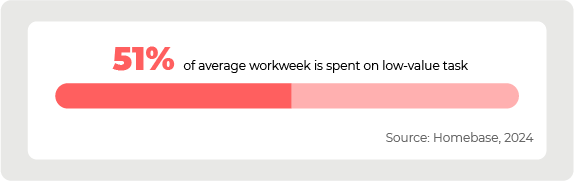
This guide reveals the four core levers top executives master to turn a quality Virtual Executive Assistant Service, like dedicated, bilingual talent from LATAM, into the engine for their next stage of growth, and how you can apply the same strategies to achieve greater efficiency and balance.
1.Mastering the Trust & Transparency Cadence:
Trust is not built through availability, but predictability.
The biggest challenge in remote delegation is trust, and trust is built on consistency. Successful leaders don’t rely on sporadic, unplanned check-ins; they prioritize a structured communication rhythm. Successful leaders understand that delegation isn’t about handing off random tasks — it’s about focusing their time on high-impact work. They identify the activities that drive growth and delegate all other tasks.
A nice communication flow is based on clear expectations and defined timelines. Here’s a two-part cadence you can implement for building successful remote collaborations:
• The 15-Minute Daily Debrief: A brief, synchronous (real-time) meeting or chat thread at the start or end of the workday. This helps clarify urgent priorities and anticipate roadblocks.
• The End-of-Week Win/Loss Report: A simple, concise report that reviews what went well, what was blocked, and lessons learned. This encourages the remote executive assistant to be proactive and analytical, not just reactive.
By creating this predictable communication flow, leaders can reduce internal processes timelines and empower their assistants to act autonomously.n
2.Building Systems and Structure That Scale:
Establishing clear systems can free up time for both you and your assistant.
To truly scale your time and team, you can start by building systems that are based on clarity and accountability. Consider using tools like Notion, Asana, or Slack to streamline communication and keep everyone aligned. It also helps to set clear decision-making guidelines for your assistant. Rather than outlining every step, create simple “If X, then Y” rules for key situations. This approach empowers your VA to act confidently and keeps your operations running smoothly without constant oversight.
Here’s a use case:
• Email Management: “If an email is from a client who contributes over $10,000 in annual revenue, flag it as ‘High Priority,’ draft a response following Template C, but do not send. If it’s a cold sales pitch, move it straight to the trash, and block the sender if it’s repetitive.”
• The Result: The leader skips 90% of low-value email noise and only touches the messages that require their unique strategic input. Their assistant is now a fully trained executive inbox gatekeeper.
This is a seamless workflow where priorities are clear, progress is visible, and decisions are made faster. Leaders can step away from the day-to-day, confident that their operations are running smoothly.
Once the right communication channels and structure are in place, the next step is protecting your time, and that’s where the Gatekeeper function shines.
3. Delegating the “Gatekeeper” Function
Your time is your most valuable asset. Look for partnerships that help you protect it.
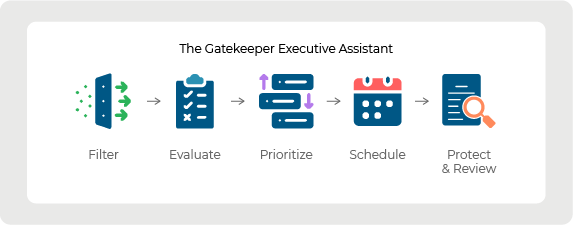
Strong leader–assistant partnerships grow from consistent communication and thoughtful delegation. Try setting up short daily or weekly check-ins to stay aligned on priorities and remove roadblocks early. Over time, aim to delegate not just tasks, but full ownership of time protection.
Encourage your VA to take on the role of Gatekeeper: a proactive partner who helps you protect your focus. This can look like:
• Politely declining low-priority meeting requests.
• Proactively rescheduling meetings that conflict with peak hours or high-priority projects.
• Grouping similar tasks, like expense reports or follow-up calls, into blocks that minimize context switching and preserve deep work time.
These strategies strengthen delegation and safeguard your time, allowing you to focus on the work that truly moves the needle.
4. Treat Your Assistant as an Internal Consultant
When your assistant feels ownership, your productivity multiplies.
When leaders treat their remote executive assistant as a true partner, they unlock far greater potential. If you only tell your assistant what to do, you’re missing out on their brainpower. The most leveraged leaders ask their VAs to look beyond the task and provide Efficiency Insights.
Because your Virtual Executive Assistant is executing the tasks, they gain a unique perspective on bottlenecks and unnecessary steps. Encourage them to act as an internal consultant by asking:
• “What process took you the longest this week, and how can we cut that time in half?”
•”I asked you to compile this report. Based on your work, what two pieces of information are missing that would make it more actionable?”
This approach elevates the assistant from an executor to a process partner; this trust creates ownership, and assistants who feel ownership deliver exceptional work.
Successful leaders know that when their assistant grows in confidence and capability, their own productivity scales exponentially.