


• Virtual executive assistants give small business owners the structure and capacity they rarely get from lean teams.
• 86% of Americans say small businesses benefit the country, yet leaders still face heavy workloads and hiring challenges.
• Business owners can hire through freelancer platforms, job boards, or specialized services. Each offering different levels of support.
• The right virtual executive assistant system helps leaders reclaim time, reduce overwhelm, and regain clarity for long-term growth.
Small businesses remain the most trusted institution in America.
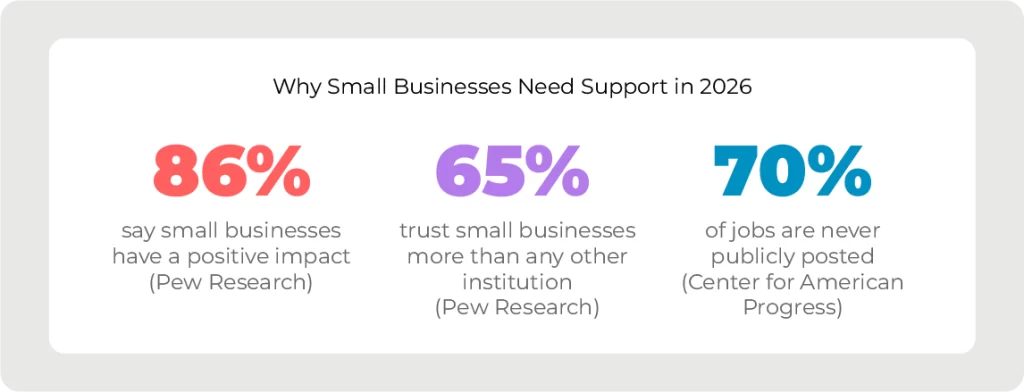
According to Pew Research Center, 86% of Americans say small businesses have a positive impact on the country, and 65% trust them more than any other institution. That trust holds steady across political lines.
But trust doesn’t lighten the workload.
Small business owners are running lean teams while juggling operations, client demands, hiring challenges, and administrative work that rarely fits into a normal day. The talent market adds even more pressure, the Center for American Progress reports that 70% of job roles are never publicly advertised, making it harder than ever to find reliable support.
This is where virtual executive assistants have become essential to your business, even if you’re unaware of it. They help leaders protect their time, reduce operational pressure, and keep the company moving without adding headcount or complexity.
This article breaks down why virtual executive assistants are becoming a smart, strategic choice for small businesses in 2026 and how choosing the right partner can restore clarity, structure, and momentum.
Virtual executive assistant services connect small business leaders with trained remote professionals who help manage the operational and administrative workload that consumes valuable time. These services exist to give founders and executives the capacity they rarely get from lean teams or traditional hiring pipelines.
At their core, virtual executive assistants take ownership of recurring responsibilities that are essential but time-consuming. These include:
• Administrative Support: Calendar management, inbox organization, document preparation
• Project Coordination: Tracking tasks, gathering updates, ensuring follow-ups
• Communication Management: Drafting responses, prioritizing emails, managing client or vendor communication
• Research & Reporting: Collecting data, preparing summaries, supporting decision-making
• Travel Logistics: Booking flights, hotels, and organizing itineraries
• Specialized Work: Social media support, bookkeeping, CRM updates, and other tailored tasks
The value isn’t just in completing tasks, it’s in creating structure. Virtual executive assistants help stabilize operations, reduce context switching, and give leaders more room to think strategically instead of reacting to daily demands.
For small businesses operating with limited time and stretched teams, this support fills a crucial gap and allows owners to regain control of their day.
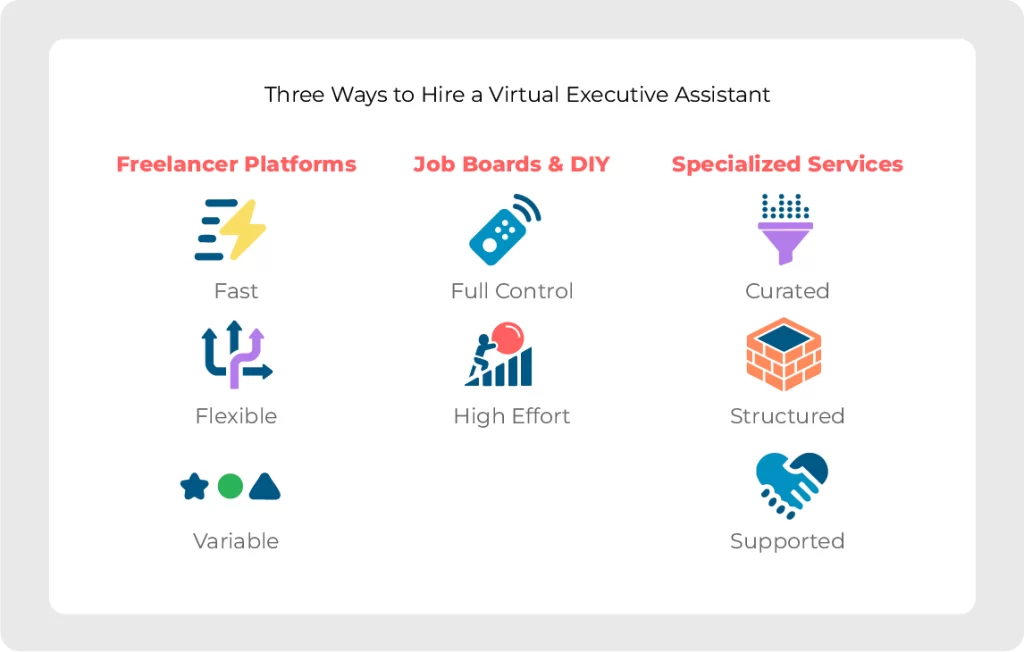
Small business owners generally have 3 ways to hire a virtual executive assistant, each offering different levels of structure, cost, and involvement. Understanding these paths helps leaders choose the approach that aligns with their time, budget, and preferred level of support.
1. Freelancer Platforms
Platforms like Upwork or Fiverr let you hire a virtual executive assistant directly. This path offers flexibility and often lower hourly rates, but it also requires you to manage screening, onboarding, task delegation, and performance oversight on your own. Quality can vary widely, and consistency is not guaranteed.
2. Job Boards & DIY Hiring
Posting a role on job boards gives you full control of the process. You create the listing, review candidates, conduct interviews, and make the final hire. This approach can work well for business owners with experience in hiring, but it requires significant time and energy, especially in a market where 70 percent of jobs are never publicly advertised.
3. Specialized Virtual Executive Assistant Services
These companies handle the entire process for you. They vet candidates, provide curated matches, oversee onboarding, manage payroll and HR, and offer ongoing performance support. This option delivers the most stability and long-term value, especially for leaders who want reliable, consistent assistance without managing the hiring process themselves.
Choosing the right path depends on how much time you want to spend hiring, how much structure you need, and whether you prefer a flexible arrangement or a fully supported partnership.
Getting the most value from a virtual executive assistant starts with how you structure the partnership. A professional service provides the foundation, but these three principles help you turn support into long-term efficiency.
Start Smart
Begin with repetitive, time-consuming tasks: calendar updates, inbox management, project follow-ups, reporting, or travel coordination. Moving these off your plate creates immediate relief and helps your assistant build confidence in your workflow.
Stay Aligned
Set a consistent rhythm. Weekly check-ins, shared task boards, and clear priorities keep communication smooth and expectations aligned. The service reinforces this structure through performance monitoring and ongoing feedback, so your assistant always knows where to focus.
Scale Up
As trust grows, expand responsibilities. Add project coordination, client communication support, research, reporting, or operational processes. A professional service can train your assistant, introduce new tools, or adjust support levels as your business evolves.
By following these steps, you gain more than an assistant you gain a system designed to keep your operations stable, your time protected, and your business moving forward.
Small businesses are operating in a landscape defined by trust, high expectations, and limited time. Leaders are juggling more responsibilities than ever while navigating a hiring market where the best talent is often invisible, overfiltered, or too costly to bring in-house.
Virtual executive assistants offer a practical solution. They expand your capacity without increasing your headcount, take ownership of the work that slows you down, and provide stability in areas that often fall through the cracks. With the backing of a professional service, you gain not just support, but structure, and that structure translates into clearer decisions and more consistent progress.
For many small business owners, the shift isn’t about doing more. It’s about finally having the space to focus on what matters most: growth, strategy, and long-term momentum. A virtual executive assistant helps create that space.
If you’re ready to strengthen your operations and regain clarity, exploring a professionally supported virtual executive assistant could be the next step that transforms how you work.